SECTION 02 // PIGMENTS, FILMS & SUBSTRATES

Colour as Craft

How custom paint booths across Asia treat automotive sheetmetal and carbon composites as optical instruments—controlling light scatter, horizon line sharpness, and colour shift.

COMPARE FINISH PROFILES
LAYER ARCHITECTURE // BEYOND FACTORY CLEAR

Why Custom Paint Reads Differently in Daylight

DOI (DISTINCTNESS OF IMAGE) & FLAKE GEOMETRY

A mass-produced passenger vehicle leaving an automated electrostatic factory paint line typically carries a total coating thickness between 90 and 120 micrometers (μm), including electrocoat primer, basecoat, and a single baked clear coat. Because robotic bell atomisers prioritise throughput and solvent efficiency, factory clear coats retain a micro-textured wave known as "orange peel," which slightly softens the reflection of surrounding buildings and clouds.

In specialist Asian custom paint ateliers—from Tochigi and Chiba in Japan to Nonthaburi in Thailand—painters pursue high Distinctness of Image (DOI), often referred to locally as Kagami-men (mirror surface). Achieving this look is not a matter of wax or polish alone; it requires architectural preparation of the underlying metal or composite substrate. Before a single drop of colour is atomised, technicians guide-coat and long-block the high-build urethane primer using 400- to 800-grit rigid sanding boards up to 600 mm in length. This eliminates subtle stamping ripples around spot welds and door handles that would otherwise distort light once high-gloss clear is applied.

Culturally, many East Asian colour formulations draw direct inspiration from traditional lacquerware (Urushi) and ceramic glazes. Rather than relying on neon hues to attract attention, painters layer translucent vermilion, deep persimmon amber, or smoked obsidian mid-coats over coarse aluminum or glass-flake ground coats. In overcast weather, the vehicle appears understated and almost dark bronze; when direct sunlight strikes the shoulder line, light penetrates the translucent mid-coat, reflects off the metallic ground layer, and exits with warm, three-dimensional depth.

160–220 μm Total dry film thickness of a multi-stage custom Kandy or pearl finish after flow-coat wet sanding. SOURCE: NIPPON PAINT AUTOMOTIVE REFINISH DATA
5 to 40 μm Particle diameter range of synthetic mica and borosilicate glass flakes used in Japanese pearl mid-coats. SOURCE: SHOWUP / CUSTOM PIGMENT SPECS
1500 → 5000 Grit Progressive wet-sanding sequence between clear-coat bake cycles to achieve zero-peel optical flatness. SOURCE: CHIBA COACHWORK STANDARDS
INTERACTIVE COMPARISON // FOUR SIGNATURE SURFACES

Inspect Surface Behaviour by Finish Type

USE TABS TO SWITCH SURFACE SPECIMENS
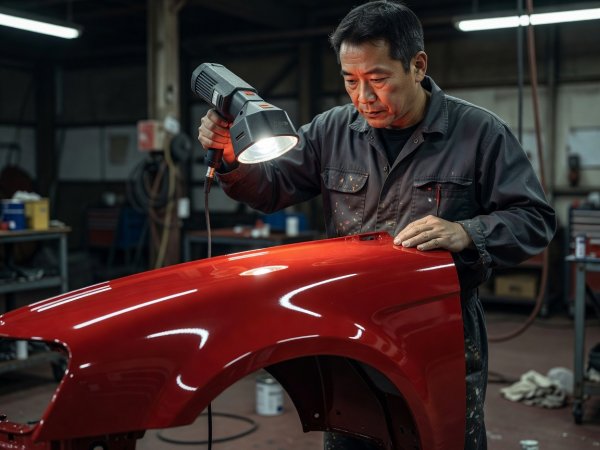
Japanese painter holding a sun-gun inspection lamp over a deep vermilion red custom painted fender 4-STAGE // TRANSLUCENT DYE

Urushi-Inspired Vermilion Over Warm Gold Ground

Built on a dark iron-oxide sealer, followed by a warm champagne-gold metallic base, three passes of translucent vermilion dye in clear binder, and two flow-sanded urethane clear coats.

REFRACTION: DEEP HORIZON | REPAIRABILITY: FULL PANEL BLEND
Optical Behaviour & Workshop Notes

Because translucent "Kandy" mid-coats intensify in darkness with every overlapping spray pass, the painter must walk the entire length of the vehicle—from front fender across the door to the rear quarter—in a single continuous motion. Any pause or uneven 75% overlap creates tiger-striping. When executed properly, the sharp radius of a fender arch glows warm amber while the vertical door skin settles into deep garnet.

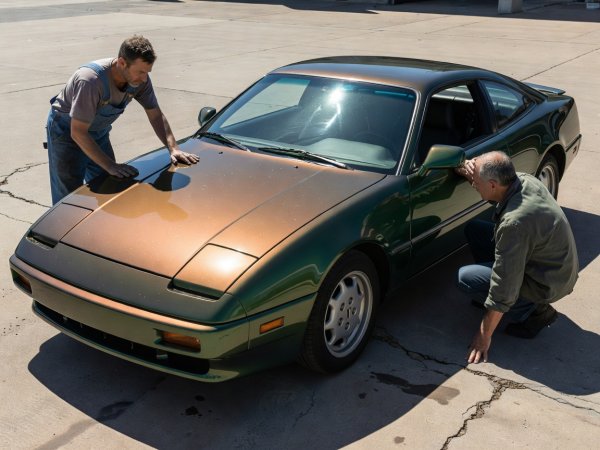
Custom coupe painted in bronze-to-emerald interference pigment examined by builders in outdoor sunlight INTERFERENCE // MULTI-ANGLE

Thin-Film Interference Flake (Andromeda / Maziora Heritage)

Popularised in Japanese show builds since the late 1990s by Nippon Paint’s Maziora line, these synthetic flakes use five-layer Fabry-Perot optical interference to shift hue by viewing angle.

BASE REQUIREMENT: JET BLACK | SHIFT: OCHRE TO DEEP EMERALD

Why Modern Builders Use Subtler Interference Ratios

While early-2000s show cars sprayed full-coverage high-contrast purple-to-green pigments across the entire body, contemporary 2026 builds reduce the interference flake concentration to 15% suspended inside a dark anthracite or espresso base. The result appears charcoal grey in shade and reveals a subtle bronze-olive shift only along muscular fender blisters.

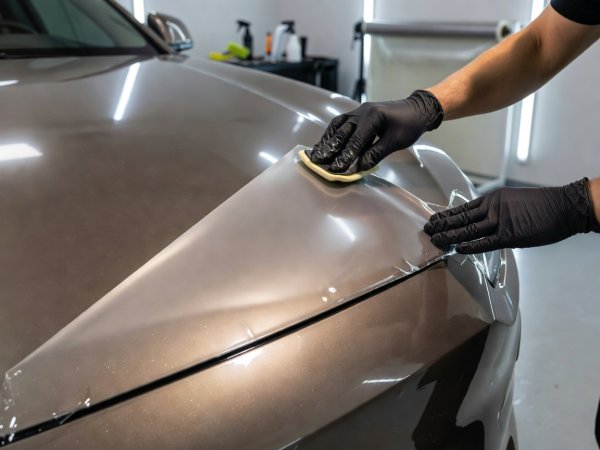
Detailer wrapping edges of a satin protective polyurethane film over a warm pewter metallic hood REVERSIBLE // 8-MIL SATIN TPU

Satin Optical Conversion Over Metallic Base

Applying matte-finish thermoplastic polyurethane (TPU) over a glossy factory metallic paint diffuses direct specular glare while spreading light evenly across body creases.

GLOSS @ 60°: 22–28 GU | SELF-HEAL TEMP: 60 °C SOLAR

Sculptural Clarity Without Permanent Repainting

For owners of rare collector vehicles in Singapore, Hong Kong, and Seoul who wish to preserve factory paint provenance, satin TPU offers a reversible architectural finish. By removing mirror reflections of overhead trees and street signs, the eye reads pure surface volume and crease tension.

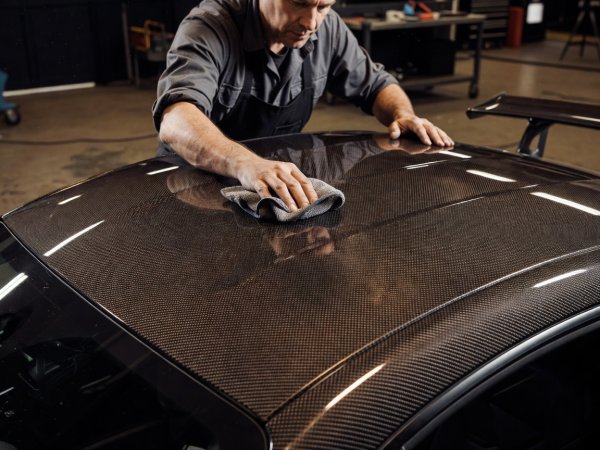
Close view of a custom builder wiping down a bronze-tinted exposed carbon fiber roof panel AUTOCLAVE // TINTED CLEAR

Oxblood & Bronze Tinted Pre-Preg Carbon

Instead of leaving replacement carbon panels stark black, painters tint the UV-protective urethane clear coat with 8% vermilion or bronze toner to tie the weave into the body colour.

PINHOLE PREP: EPOXY PORE FILLER | UV BLOCK: HALS STABILISED

Eliminating Dry-Weave Pinholes

Raw carbon fiber parts often contain microscopic resin voids at the intersections of the carbon tow. Spraying standard paint over unprepared carbon causes solvent popping during baking. Specialist shops seal the cured composite with transparent high-solids polyester pore filler, sand flat to the weave crown, and apply UV-stabilised tinted clear.

TECHNICAL REFERENCE // COATING SYSTEMS

Finish Specification & Care Matrix

Comparison of Custom Automotive Surface Systems
Surface System Typical Layer Count Dry Film Thickness 60° Gloss Reading Field Maintenance Requirement
Show-Grade Flow-Sanded Lacquer / Urethane 6–8 Layers (Primer, Ground, Mid, 2× Clear) 175–210 μm 94–98 GU pH-neutral hand wash; periodic non-silicone glaze
Satin / Matte Urethane Clear Coat 4 Layers (Primer, Base, 2× Flattened Clear) 120–140 μm 18–25 GU Zero abrasive polishing (polishing creates permanent shiny spots)
Aliphatic Satin TPU Film Over OEM Paint OEM Paint + 200 μm Film 310–330 μm Combined 22–28 GU Warm water self-heals light wash marring; 7–10 year film life
Tinted Clear Over Pre-Preg Carbon Epoxy Seal + 3× Tinted UV Clear 110–135 μm Over Weave 92–96 GU High-UV ceramic topcoat advised in tropical latitudes